

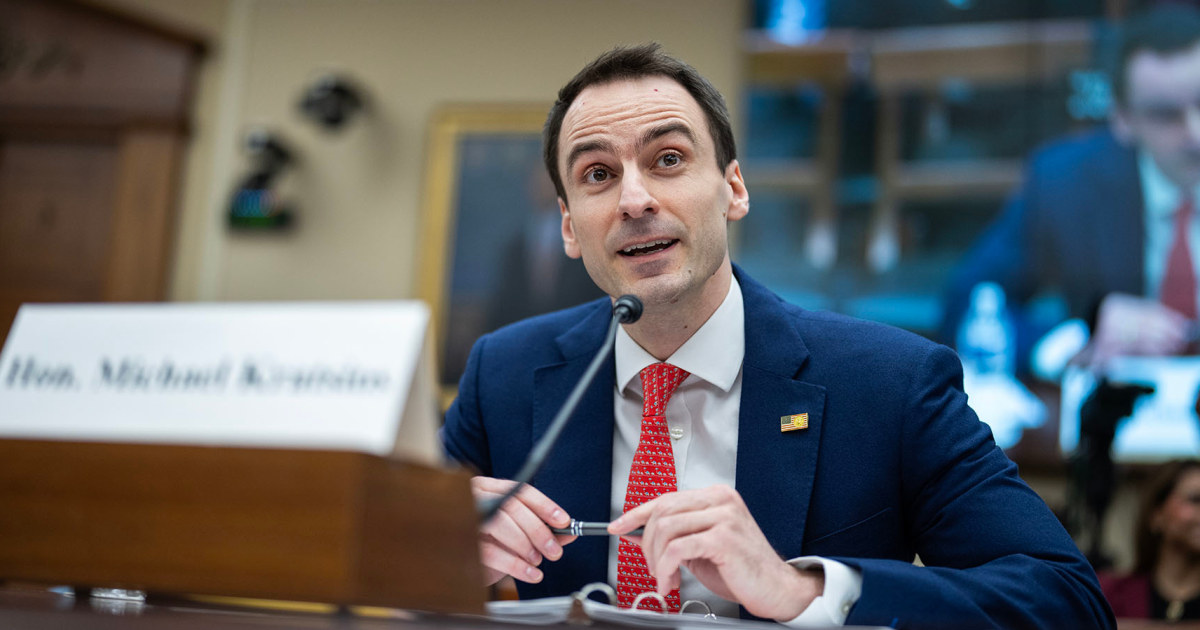
Going into this week’s World Economic Forum in Davos, Switzerland, the White House’s top science and technology adviser, Michael Kratsios, signaled some chilly conversations with European leaders may lie ahead on the topic of artificial intelligence and the way it is regulated.
“I will continue to point out to my tech minister counterparts the ways they can create a regulatory environment to allow AI to thrive,” Kratsios told NBC News, “to make sure they’re not getting ahead of themselves with overburdening regulations, like the EU AI Act, which are an absolute disaster.” For Kratsios, the Trump administration’s light-touch approach to AI regulation is the winning formula.
"There’s been an A-B test for decades on how you lead in technology, and it’s very obvious what the recipe is,” said Kratsios, director of the White House Office of Science and Technology Policy and one of the nation’s leading artificial intelligence advisers.
He’s Trump’s official science advisor now, but Idk why people leave his very impressive stint as Trump’s default science advisor with no science experience off of his resume these days…
Sign of the times I guess
Trump’s de facto science adviser is 31 and has no science training